
Why We Can't Stop Reading About the End of the World
The future arrived. It was mostly administrative.
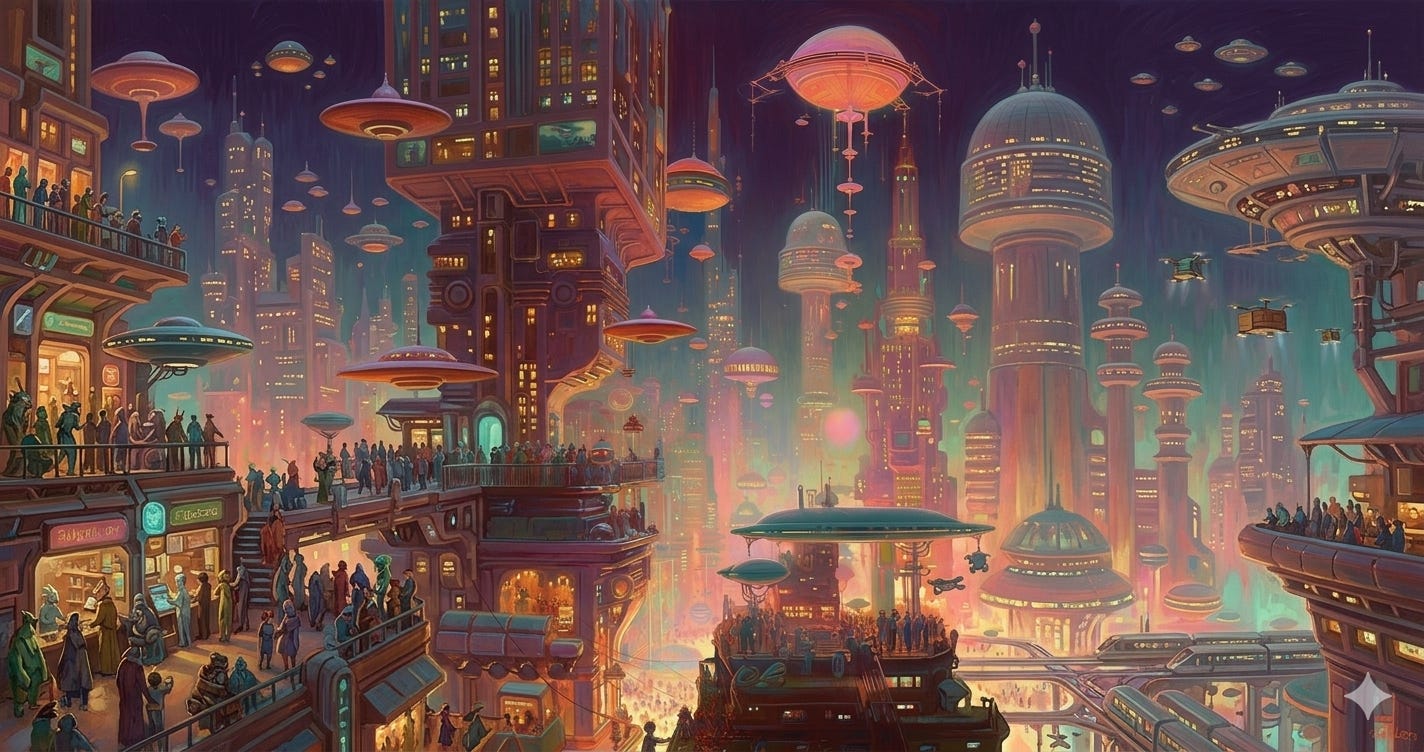
We were once promised a future of peace, prosperity, and flying cars. The trajectory was supposed to be upward and obvious. A story with a clear direction. Instead, it seems that the best we can hope for is faster shipping and a more humane approach to ride-sharing. We got a world that buzzes with a low-frequency dread that never quite resolves into either catastrophe or relief. The future arrived. It just turned out to be mostly administrative.
This is not a small thing to mourn. This is why, I think, we have become such hungry consumers of the dark. True crime. Apocalypse fiction. Serial killers braided into quantum cosmology. Stories that bloom outward from a single crime scene into something involving deep space, time loops, spooky forests, the end of everything. We have always loved to be frightened, but there’s a newer quality to this appetite, something less about thrill and more about orientation. The scary story gives the ambient dread a local habitation and a name.
So we read this not because we’re broken. But because we’re practicing.
When everything around you is shapeless emergency, the contained emergency of a story is a relief. There’s a killer, a victim, a timeline. Someone figures out what happened. The shape is terrible, but it’s a shape. You can follow it. The true crime podcast at 7am is not evidence of morbidity. It’s a mind rehearsing the moves that daily life refuses to support. It is cause and effect, sequence, the idea that if you look carefully enough, you can understand.
Science fiction serves a different function but the same need. To be simultaneously freaked out and mystified is to practice living inside the present, which is genuinely disorienting, which asks you to hold more ambiguity than humans were designed for. We live inside technologies we don’t understand, economies we can’t model, systems whose emergent behavior surprises even the people who built them. Strange fiction that takes you somewhere you don’t recognize and makes it feel true is doing serious work. It’s calibrating the range of what you’re willing to call familiar.
The best writing about any of this, i.e. human limits, the monstrousness, the beauty sitting right next to the monstrousness doesn’t resolve the tension. It holds it. It stays restless. It seeps in like floodwater, which is to say it doesn’t ask permission and it gets into everything.
What I think we actually want from stories is not escape. Escape implies finding something cleaner than what you have, and we’re too suspicious for that now. We’ve been inside too many narratives that turned out to be selling something. What we want is company. Someone who looked at the same confusing world and didn’t tidy it up prematurely. Who stayed with the difficulty and wrote back from there.
Nothing is inevitable. We say this sometimes as comfort, and sometimes it is. The ending remains to be written. That’s the terrifying part and also, if you’re a certain kind of person, the reason you keep reading. So when a writer tells you they’re a con artist, they mean it as a confession. I love that. The honesty of admitting the dishonesty. What they’re really saying is: I took the messy thing that happened and I made it into a shape, and the shape is not the thing, but it’s the only way I know how to hand it to you.
All writing is this. You replace your own reality with the illusion of others. That’s the deal. You agree to it when you open the book.
So let’s pack the scary books into the beach bag and call it levity. I might be lying, but the reading is real.